Rosa Butler · 23 October 2026
The Dynamics of Reciprocal Knowledge Hubs Among Autonomous Online Publishers
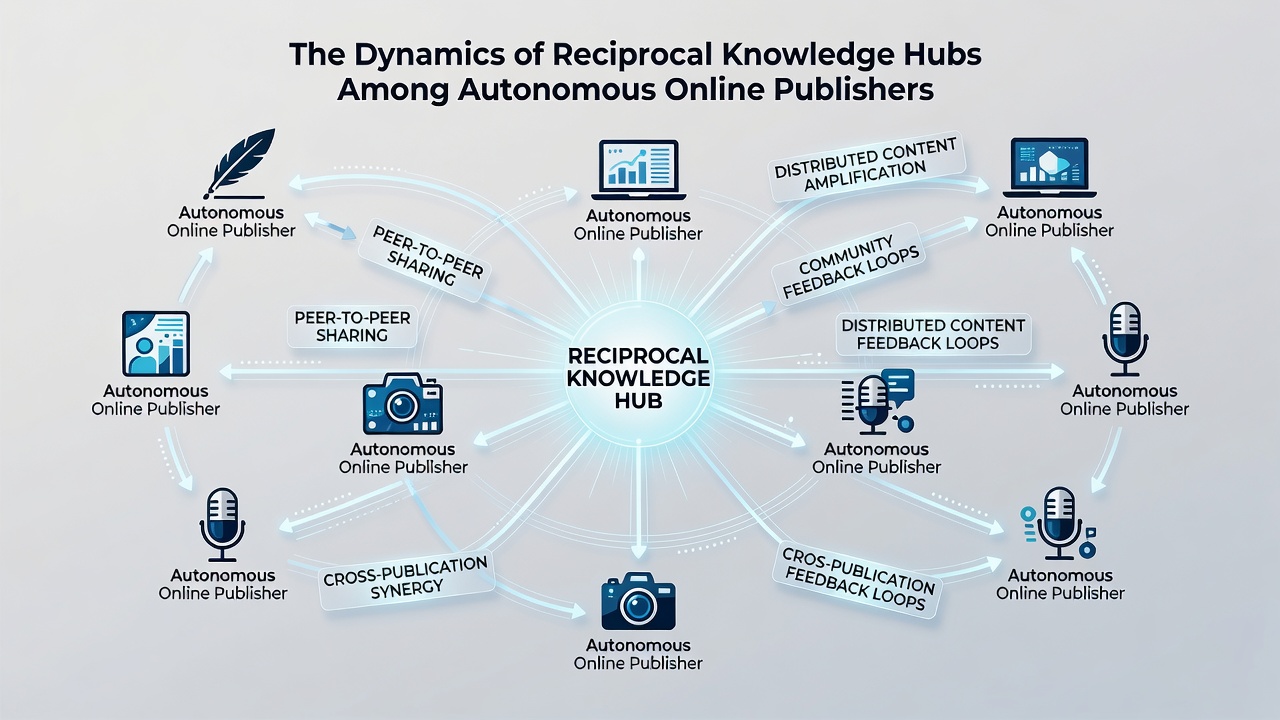
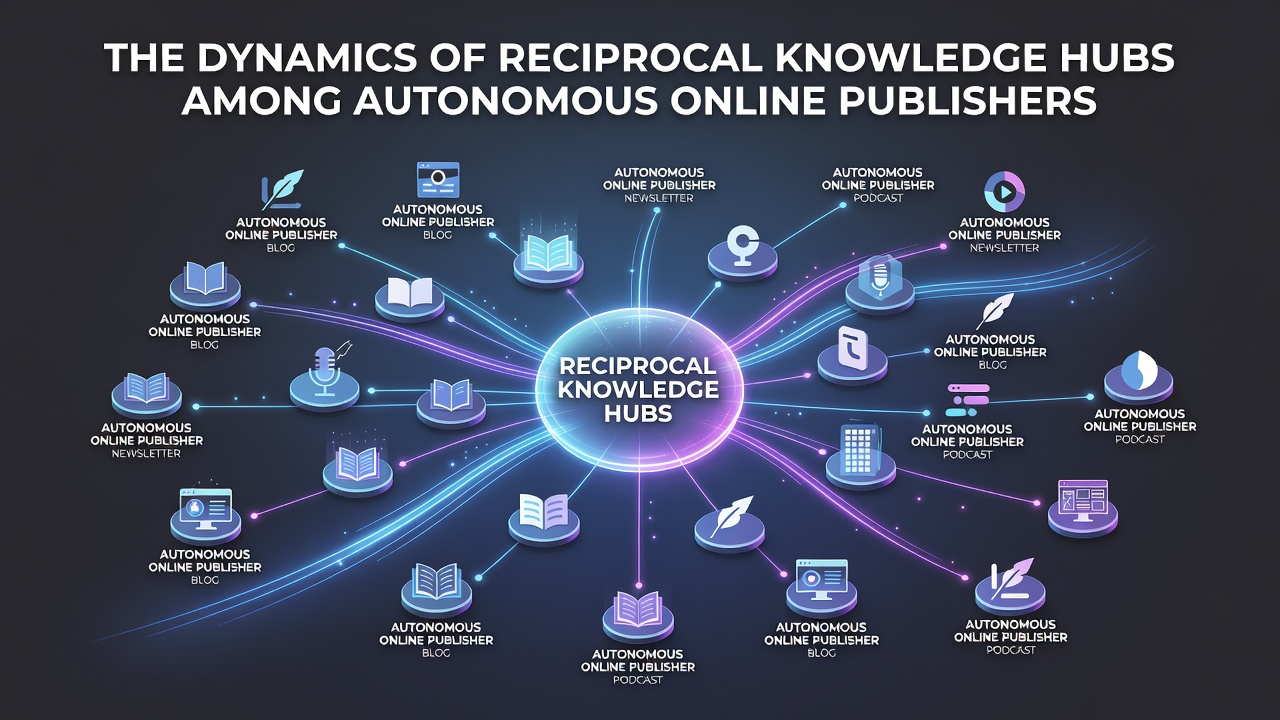
Independent publishers operate outside major media conglomerates yet maintain structured systems for sharing specialized insights on audience metrics, content distribution tactics, and technical infrastructure. These reciprocal knowledge hubs emerge when solo operators exchange data sets and operational frameworks without centralized oversight, and the practice has gained measurable traction as site owners track rising costs for paid traffic acquisition through 2025 into October 2026. Formation typically begins with small clusters of sites focused on overlapping verticals such as local reporting or technical documentation. Participants establish shared repositories where they upload anonymized analytics summaries and test results from A/B experiments on newsletter signup flows. One documented case involved a group of fifteen European sites that pooled server log data to identify common patterns in referral traffic quality, which allowed each member to adjust internal linking strategies based on collective findings rather than isolated trial and error. Mechanisms rely on agreed protocols that define what counts as equivalent value in exchanges. Publishers contribute original research summaries on algorithm updates from search engines or social platforms, and in return they receive access to aggregated benchmarks on conversion rates across similar niches. Data from the Australian Communications and Media Authority indicates that independent digital outlets increased their use of such collaborative benchmarking by 22 percent between 2023 and 2025, reflecting a shift toward resource pooling as advertising revenues remained uneven across regions.Operational Structures Within Knowledge Hubs
Hubs maintain rotation schedules for content audits and tool evaluations so that no single member bears repeated administrative load. Members document these contributions in version-controlled repositories that track input dates and output benefits, which creates transparency and reduces disputes over reciprocity balance. Observers note that hubs often segment knowledge categories into audience development, technical optimization, and regulatory compliance, allowing specialists within each group to focus exchanges on their strongest areas. Technical tools supporting these structures include private wikis, encrypted file shares, and scheduled video calls where participants review recent performance data. In one instance a North American cluster integrated a shared dashboard that pulled public API data from multiple analytics platforms, then overlaid member-submitted notes on campaign outcomes. This setup enabled real-time comparison of traffic sources without exposing proprietary visitor lists.Geographic and Thematic Variations
Hubs in different regions emphasize distinct priorities. Australian and Canadian groups frequently exchange information on data privacy regulations and their impact on cookie-based tracking, while European clusters concentrate on multilingual content syndication experiments. Figures from the European Commission’s digital single market reports show that cross-border knowledge sharing among small publishers rose notably after updates to the Digital Services Act in 2024, as operators sought practical interpretations of compliance requirements. Thematic specialization also shapes hub longevity. Publishers covering health or finance topics form tighter verification loops because regulatory accuracy carries higher stakes, whereas entertainment-focused groups prioritize speed of trend reporting and platform algorithm signals. Researchers at the University of Melbourne documented that specialized hubs sustained participation rates above 70 percent over two-year periods when they enforced clear contribution minimums tied to measurable outputs.